The industries today are dependent on efficient machinery to ensure productivity and quality. Industrial Rollers are one of the most crucial elements that ensure smooth running of industrial equipment. Such rollers are important in the production, handling of materials, packaging, printing, production of textile among many others. Such rollers are strong and durable which makes movement of materials across machines smooth, reduces friction in the operations, and ensures that the products produced will always be of the same quality. Industrial machines can easily be prone to breakdown, poor performance as well as high maintenance costs unless rollers are designed properly. The quality of Industrial...
The industries today are dependent on efficient machinery to ensure productivity and quality. Industrial Rollers are one of the most crucial elements that ensure smooth running of industrial equipment. Such rollers are important in the production, handling of materials, packaging, printing, production of textile among many others.
Such rollers are strong and durable which makes movement of materials across machines smooth, reduces friction in the operations, and ensures that the products produced will always be of the same quality. Industrial machines can easily be prone to breakdown, poor performance as well as high maintenance costs unless rollers are designed properly.
The quality of Industrial Rollers is designed to be able to resist heavy weight, high temperature, and constant working. They have a great durability and hence they are a necessary element to the industries that demand reliability and long-term performance.
What Are Industrial Rollers?
Industrial machines have the need to use components that are capable of holding heavy materials and still moving smoothly and stable. Industrial Rollers are cylindrical mechanical parts fitted in the machines to move, compress, direct or work through materials in the production process.
Made out of materials like:
- Rubber
- Steel
- Polyurethane
- Silicone
- Stainless steel
Such rollers are meant to give uniform motion and pressure during the process of manipulating various kinds of industrial materials. They are used in production lines to make sure that materials pass through production lines without interruption or damage.
Their robust construction makes the Industrial Rollers popular in the heavy operation industries where reliability and durability is of paramount importance.
Key Features of Industrial Rollers
The quality of rollers that are used in the system relies much on the performance of the industrial machinery. The features of High-performance Industrial Rollers are made, such that a machine can be more productive and last longer.
1. High Load Capacity
The rollers are constructed in a way that they can accommodate heavy materials without distorting. They have a great construction to sustain constant industrial loads.
2. Excellent Durability
One of the most important features is durability. These rollers have a design that ensures that they last a long time without wear or loss of performance.
3. Smooth Material Movement
They aid in constant flow of materials in machines hence running smoothly in production lines.
4. Resistance to Heat and Chemicals
The rollers needed by many industries must be able to withstand severe temperatures and chemical environments. This is offered by advanced materials.
5. Low Maintenance
Well designed rollers enhance less frequent maintenance thus saving time and operating expenses.

Types of Industrial Rollers
There are various types of rollers that are used in various industries based on the machine design and use. Some of the widely used Industrial Rollers in manufacturing and processing operations are as below.
Rubber Rollers
The rubber rollers are excellent in grip and cushioning. They find application in printing, packaging and textile.
Steel Rollers
Steel rollers are considered to be strong and enduring. They are applicable in the industrial uses that are heavy duty.
Polyurethane Rollers
The rollers provide excellent resistance to abrasion, chemicals thus they are suitable in industrial environments that are demanding.
Silicone Rollers
Silicone rollers are widely applied in the areas where heat resistance is needed.
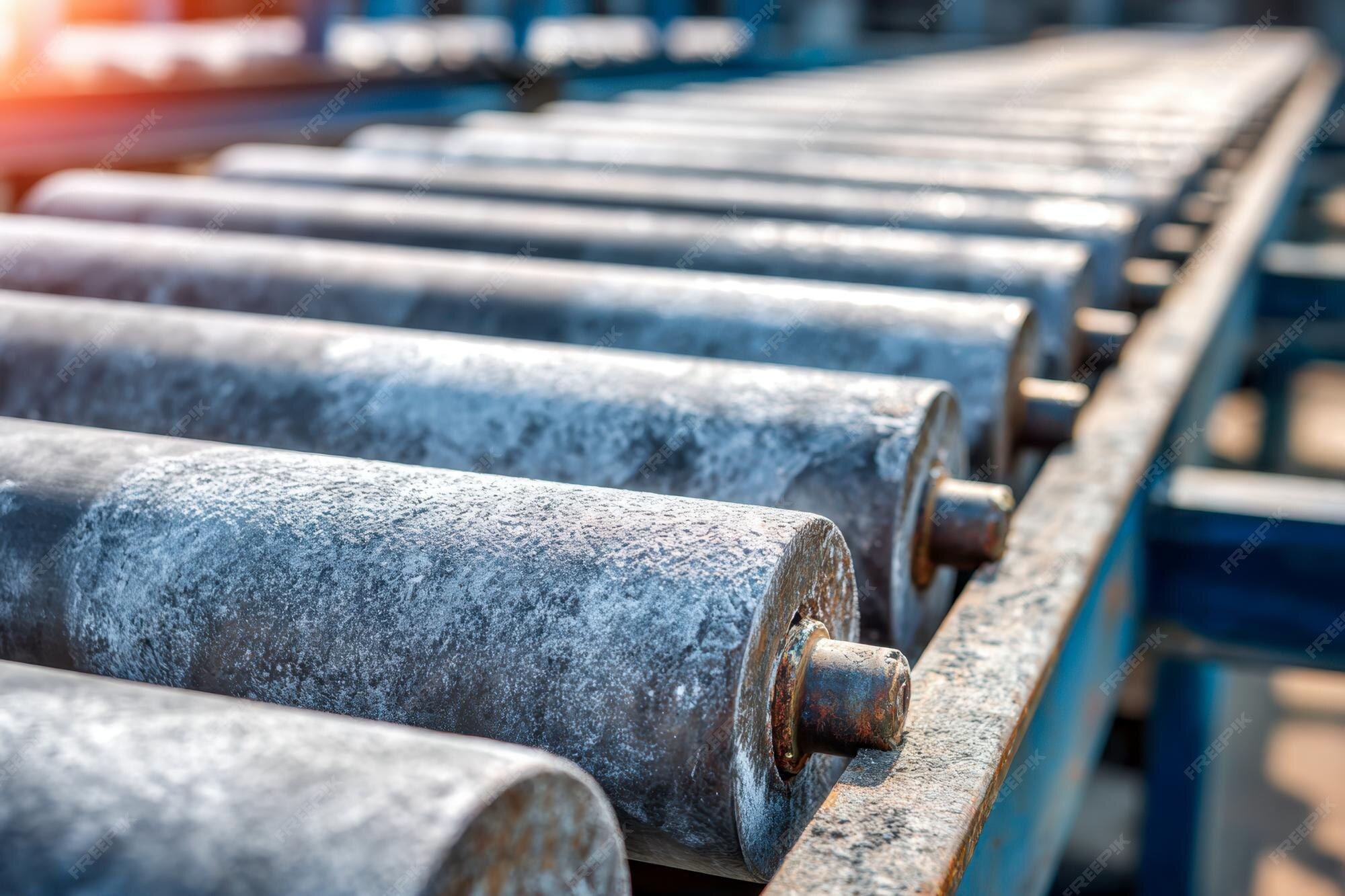
Conveyor Rollers
The rollers have become quite popular in the conveyor systems to ensure smooth flow of goods and materials along the production lines.
Key Advantages of Industrial Rollers
There are a number of advantages associated with the use of high-quality Industrial Rollers in machines which have a direct effect on productivity and efficiency.
Improved Machinery Performance
Rollers are used to ensure pressure and movement is consistent in machines and therefore allow maximum performance.
Reduced Machine Downtime
The long-lasting rollers minimize risks of failure and unforeseen repairs of equipment.
Increased Production Efficiency
Fluid flow of materials assists in the maintenance of speed and workflow.
Long Service Life
Rollers with high quality are constructed such that they can last several years thus minimizing the replacement costs.
Versatile Applications
Such rollers may be tailored to suit the requirements of different industries.
Applications of Industrial Rollers
Industrial Rollers are applicable in many industries due to their reliability and other capabilities.
Manufacturing Industry
Rollers are used to transport materials through the various production phases.
Printing Industry
They are employed in exerting force and directing paper using printing machines.
Packaging Industry
Packaging machines involve rollers which seal, direct and process packages.
Textile Industry
Rollers are used to move fabrics when they are being manufactured and finished.
Material Handling Systems
Conveyor rollers are used to carry the products in a warehouse and factories in an efficient way.
Key Specifications Table of Industrial Rollers
Feature | Description |
Material Options | Rubber, Steel, Polyurethane, Silicone |
Load Capacity | Designed for light to heavy industrial loads |
Durability | Built for long operational life |
Heat Resistance | Suitable for high-temperature environments |
Surface Finish | Smooth, grooved, or textured surfaces |
Customization | Size and coating can be customized |
Industrial Applications | Printing, packaging, textiles, manufacturing |
Factors to Consider When Choosing Industrial Rollers
The right choice of Industrial Rollers is a factor to consider in order to have a good machine functionality. The industries need to take into account the following factors:
Load Requirements
The roller should be in a position to sustain the force and mass of the machine working.
Material Compatibility
Roller material used should be appropriate to the environment and process of production.
Surface Finish
Grip, friction, and handling of the material are influenced by texture of the surface.
Temperature Resistance
Some industries involve the use of rollers that can withstand excessive heat.
Maintenance Needs
Rollers are supposed to be made in the form of long-term reliability and minimum maintenance.
Why Quality Industrial Rollers Matter
In industrial production, machines that are working 24 hours round the clock are very necessary. When rollers malfunction or become worn out in a short time, it may interfere with production causing a costly down time.
The solution to such issues is to use high-quality Industrial Rollers, which provide high-quality construction, stable operation, and reliable movement of the material. They are necessary in the current machinery due to their capacity to carry heavy loads and survive in tough environments.
Indian Roller Industries Pvt. ltd is one such example of a manufacturer whose roller solutions are trusted and which manufacture durable rollers meant to serve industry purpose.
Future Trends in Industrial Rollers
The industrial technology is still developing and rollers are also becoming advanced to suit the current manufacturing needs.
They are likely to develop in the future to include:
- Current technology in coating Finings.
- Improved wear resistance
- More accurate through precision engineering.
- Through sensor integration, smart rollers were developed.
- Increased automation industry durability.
The innovations will also enhance the performance and safety of industrial devices further.
Key Highlights
Key Factor | Details |
Primary Function | Support smooth movement of materials in industrial machines |
Strength | Designed to handle heavy loads and high pressure |
Durability | Built for long operational life in continuous production |
Material Options | Rubber, Steel, Polyurethane, Silicone, Stainless Steel |
Industrial Use | Manufacturing, Printing, Packaging, Textile, Material Handling |
Performance | Improves machine efficiency and productivity |
Maintenance | Requires minimal maintenance with proper usage |
Customization | Available in different sizes, coatings, and designs |
Resistance | Can resist heat, chemicals, and abrasion |
Reliability | Ensures stable and consistent industrial operations |
Conclusion
High-quality and robust equipment relies on sound and stable structures that help to facilitate the work and sustainability. The role of industrial Rollers in the modern industrial system is important to facilitate the efficient handling of materials, enhance productivity of machines and minimize the costs of maintenance.
These rollers are still a critical component of the industrial manufacturing and processing systems because of their capacity to deal with heavy loads, work in harsh conditions, and deliver steady performance
The sale of high-quality rollers will keep increasing as the industries embrace high-technologies. Durability of rollers also guarantees improvement in the performance of the machine, its productivity, and success in its operations over time.
Frequently Asked Questions (FAQ)
1. Applications of Industrial Rollers?
Machinery involves the use of industrial rollers to move, press, direct, and handle materials during a manufacturing and industrial process.
2. What are the industries that Industrial Rollers are applied to?
They are widely applicable in the manufacturing industry, packaging, printing, textile industry and the material handling systems.
3. What are the materials used to manufacture Industrial Rollers?
Rubber, steel, polyurethane, and silicone are some of the common materials that are used according to industrial needs.
4. What is the significance of durable Industrial Rollers?
Industrial rollers are durable and are able to reduce machine downtimes and enhance efficiency as well as increase the life of industrial machines.
5. Are Customizable Industrial Rollers possible?
Yes, rollers can be designed depending on size, coating, material and industrial use.