How to Choose the Right Bridle Roller
Admin
Article Content
A hidden production audit across multiple metal lines found that nearly 41% of strip handling defects begin with roller tension inconsistency, not operator error, which is why one poorly selected Bridle Roller can quietly reduce annual output more than an obvious machine shutdown.
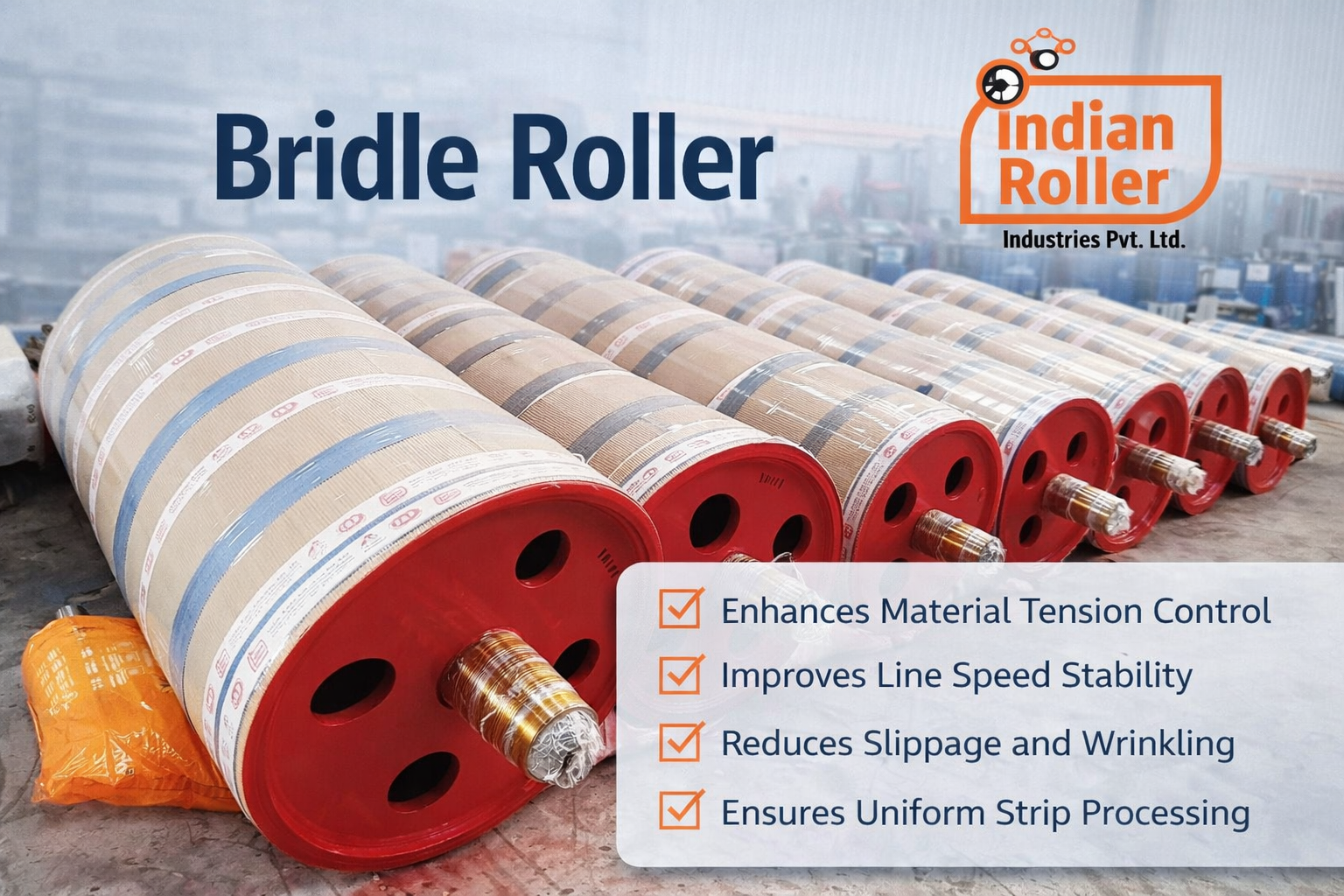
That number surprises many plant managers because the Bridle Roller often appears simple from the outside, yet inside a processing line, it performs the same role that balances the performance in a moving train—if one section loses stability, every connected section feels the impact immediately. In continuous steel processing, the Bridle Roller controls strip movement between critical line stages where speed, tension, and directional alignment must remain synchronized. Without that precision, metal strips can slip, wrinkle, stretch unevenly, or develop surface marks that later become expensive rejection points.
A modern Roller must also work alongside systems such as the Squeeze Roller, where liquid removal and strip pressure influence how smoothly material enters the next production zone. That relationship matters because rollers do not work alone; they function as a coordinated chain where one weak element reduces total line efficiency. The same production logic applies when companies evaluate a Sink Roller Manufacturer because zinc bath operations and strip guidance demand similar precision principles.
In galvanizing environments, roller alignment determines whether coating quality remains stable or fluctuates under thermal stress. A high-speed line often includes an Accumulator Roller section to absorb strip movement during coil transitions, that means choosing an experienced Accumulator Roller Manufacturer becomes just as important as selecting the right Bridle Roller itself.
In pickling lines, a durable Pickling Squeeze Roller removes excess chemical solution before the strip advances. If that stage becomes inconsistent, later tension handled by the Bridle Roller becomes harder to maintain accurately.
A dependable Steel Industries Sink Roller also influences strip travel inside molten coating zones where surface conditions are aggressive and thermal loads remain constant. This explains why advanced steel plants increasingly evaluate complete roller ecosystems rather than isolated roller purchases.
Today, every Bridle Roller must perform under higher production speeds than systems built a decade ago. Factories want greater output without sacrificing strip finish, which raises engineering expectations significantly. That is why, selecting the right Bridle Roller now means evaluating traction behaviour, shaft precision, coating quality, thermal stability, and line compatibility together rather than treating roller procurement as a routine purchase decision.
The stronger the roller system, the more quietly the production line performs.
Industrial Uses of Bridle Roller
There are several applications of the Bridle Roller in strip processing lines. The obvious application is tension control, but it can also be used to influence surface quality, synchronisation and speed control.
Strip Tension Control in Processing Lines
The main use of a Bridle Roller is tension control of the strip between process segments where the strip experiences an abrupt speed change. It allows the strip to flow freely even with different load levels of production segments.
Think of stretching and pulling a ribbon with your hands, one hand slower than the other, if you don't put the same pressure on both hands, the ribbon wrinkles, slips or tears and it's the same with metal strips. A Bridle Roller creates friction without damaging the surface of the strip that ensures product integrity.
Integration with Liquid Removal Systems
In some lines an additional Squeeze Roller is placed before or after Bridle Roller as it removes excess liquid without distorting the strip. A Pickling Squeeze Roller is especially important in a pickling line because chemical deposits can interfere with the grip. Liquid distribution affects tension, so a Bridle Roller is best used with well-calibrated liquid controls. One roller supports the effectiveness of the other.
Coil Transition Support
An Accumulator Roller is used to store a small amount of strip motion to facilitate coil change which improves line continuity. An Accumulator Roller Manufacturer includes this system to prevent strip feeding into and out of the line with sudden variations in tension which prevents the Bridle Roller from force fluctuations.
Galvanizing and Coating Line Stability
A Steel Industries Sink Roller feeds strips through the zinc baths into tension sections which is followed by the Bridle Roller. This link influences coating thickness and steady movement helps the strip surface.
Advantages of Bridle Roller
The performance advantages of a good Bridle Roller may not be apparent, but the correct choice has no surprises.
Better Tension Accuracy
A designed Bridle Roller increases strip traction while controlling tension across the strip. This reduces side variation. Improved tension control reduces edge distortion and corrections.
Lower Surface Damage Risk
Even Bridle Roller prevents additional wear on strip surfaces. This is important for coated steel and material with a high finish which also helps a Squeeze Roller. Good strip contact eliminates pressure fluctuations.
Longer Service Durability
A durable Bridle Roller uses a heavy shaft, hardness and tolerances. These features extend service intervals. A good Sink Roller Manufacturer would generally apply this to other rollers which simply simplifies maintenance.
Reduced Energy Waste
A freely spinning Bridle Roller puts less demand on motors that reduces energy use over time. An Accumulator Roller in sync with the rest of the line has the same effect. Lower drag leads to higher efficiency.
Comparison Table
Feature | Standard Roller | Advanced Bridle Roller |
Tension Precision | Moderate | High |
Surface Grip | Basic | Controlled |
Speed Handling | Limited | High-speed capable |
Maintenance Frequency | Higher | Lower |
Integration Ability | Partial | Full-line optimized |
A modern Bridle Roller is much better than the more traditional options in terms of variable strip speed. This disparity becomes vital when it is operating at high output. Another thing is the compatibility of rollers among connected systems which is also ensured by a modern Accumulator Roller Manufacturer. That minimizes conflict of operations.
Why to choose us
The choice of supplier for a Bridle Roller is the deciding factor whether bridge quality exists only on the shop floor or in the field. Manufacturing starts with process control.
Precision Production Standards
Every Bridle Roller must be dimensionally machined as any minute differences result in line instability. That's why we continue to balance shafts before shipping because precision prevents future vibration.
Complete Roller Support
We offer more than one product type, including Sink Roller Manufacturer products, Accumulator Roller Manufacturer assemblies and bespoke line rollers and thus, allows customers to buy turnkey systems. Product integration simplifies installation that improves commissioning speed.
Material Engineering
Each Bridle Roller is used in different line conditions by which materials cannot be generic. The same goes with every Steel Industries Sink Roller in thermos-zones. Correct material extends reliability.
Line-Specific Design
Every production line offers different demands in terms of width, speed, and coating. A standard Bridle Roller can be restrictive so we design for line requirements that improves long-term performance.
Future Trends
The future of the Bridle Roller is smarter monitoring, superior materials and more foreseeable maintenance. The requests in the industry are on the rise.
Sensor-Based Monitoring
Currently, plants frequently fit all Bridle Rollers with sensors to monitor vibration and "wobble". That allows them to tell when they are wearing, before they break. Repairs are proactive and save time in production.
Surface Coating Development
Then, there is enhanced friction control due to surface technologies; pickling Squeezer Roller is also coated in this technology. These coatings are wear and corrosion resistant that enhances service life.
Lightweight Structural Design
The structures now of Accumulator Roller systems are more efficient in terms of their load and inertia which enhances speed response. The Efficiency is now also in focus as the visionary Accumulator Roller Manufacturer. Light systems save energy.
Sustainable Performance
Energy efficient design is now influencing industrial purchasing patterns. A well-designed Bridle Roller is a smooth roller that is less frictional. It has a massive annual payback of small efficiency improvement which shows the importance of design becoming self-evident.
Conclusion
A well designed Bridle Roller enhances strip control, defends the quality of the surface and enhances the long-term production reliability of the modern metal processing systems. Its effect extends way beyond mere strip movement.
In combination with a Squeeze Roller, line stability is greatly enhanced when correctly coordinated as it directly facilitates improved product consistency. There is also a reliable Sink Roller Manufacturer and a skilled Accumulator Roller Manufacturer that aid to secure complete harmony of the system which eliminates undiscovered compatibility problems.
With the increasing demands on the industrial speed, the strategic value of each Bridle Roller will be even higher. Making smart decisions today can save a lot of money by correcting a decision tomorrow.
FAQs
Why do we have a Bridle Roller?
Bride Roller regulates strip tension between production phases which helps to maintain stability of movement.
Why is a Squeeze Roller used adjacent to a Bridle Roller?
A Squeeze Roller eliminates the surplus liquid and enhances consistency of strip entry that supports constant tension.
What is provided by an Accumulator Roller Manufacturer?
An Accumulator Roller Manufacturer develops systems which absorb the variation of strips when changing coils. This protects continuity.
What is so significant about a Steel Industries Sink Roller?
In thermal driving, a Steel Industries Sink Roller is used to guide strip through coating areas that helps in accuracy of downstream rollers.